
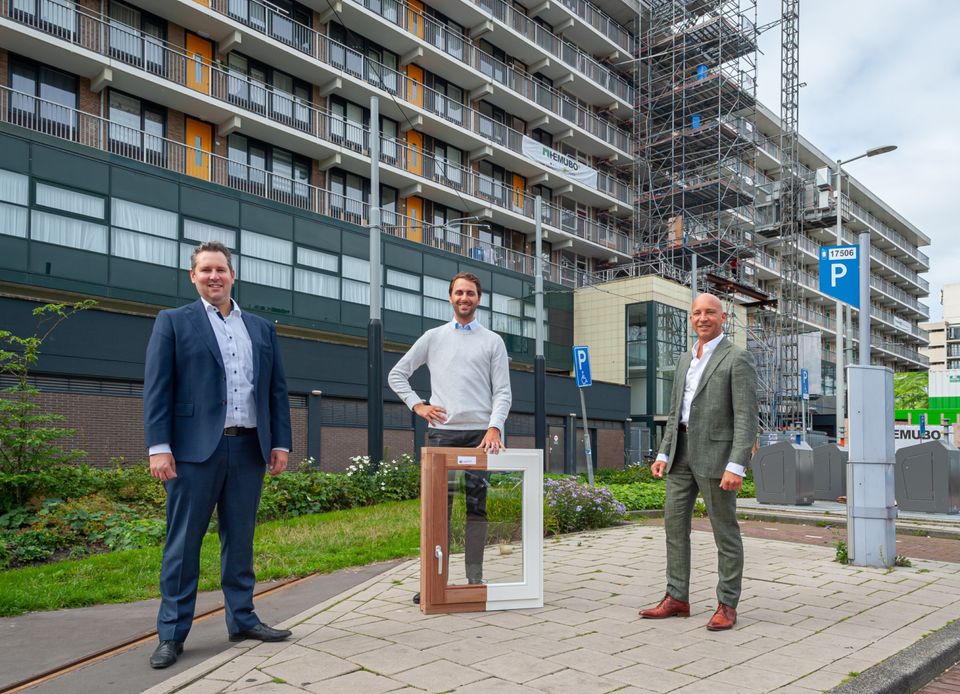
Making the construction sector more sustainable is one of the spearheads of Dutch climate policy. To meet stricter energy requirements, 1.5 million homes need to be made more sustainable in the next ten years. Hemubo, with a number of its business units specialising in renovating and maintaining real estate, is keen to be at the forefront of this transition to a circular construction economy.
'In terms of circular building, we are really still in the pioneering phase at the moment. It is a new field and because it is not yet the standard, it requires a lot of research, engineering and persuasion. The wheel has to be reinvented again and again.' Speaking is Tom Bergmans, director at Hemubo. He continues: 'Moreover, circular products are not yet always available as cheaply as new stuff. The transition to a circular economy is a quest; the whole economic model in the construction sector has to be shaken up. It is not an easy process, but certainly no less fun for that.'
Affordable sustainability
In the coming years, housing corporations not only face the challenge of making their homes more sustainable, but also, on the contrary, the challenge of building enough affordable new homes. This is why Hemubo believes it is important to keep building and housing in balance. So not very sustainable construction, resulting in unaffordable homes, but affordable sustainability. 'In line with the national government's objectives, we want to transform our company into one hundred per cent circular, but this transition must be economically feasible,' Tom explains. 'We do want to keep making money. If it could be done tomorrow, we would do it immediately. But construction is, of course, a strongly chain-oriented sector. Investments in sustainability and circularity ultimately have to be paid from the exploitation of the property.
We operate mainly in social housing, where the revenue model of the property owner - in our case the housing association - is limited.' 'Flagship projects in residential construction are still mainly emerging in the more expensive segment, both residential and office. Where individuals and entrepreneurs are willing to pay for sustainability, the so-called 'early adopters'. It just takes time for those new technologies to become more affordable,' says Tom. 'Therefore, I expect that construction companies active in social housing will be able to go fully circular somewhat later than other parts of the construction sector. Construction obviously creates a huge amount of CO2 emissions and waste. So there is a lot to gain, but at the same time it is also an oil tanker that is not so easy to adjust.'
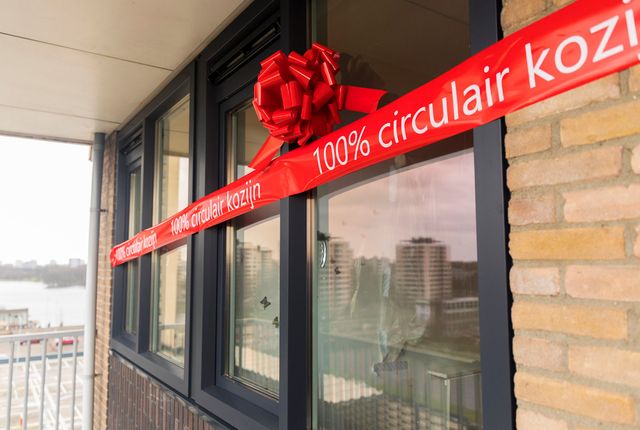
“ Collaboration within the supply chain is essential for developing circular concepts ”
Tom Bergmans, managing director Hemubo
Also come to Almere
Almere is the youngest city in the Netherlands and rapidly developing, which makes it attractive to startups and innovative, sustainable businesses. The city offers a unique blend of technological progress and sustainable transition, with contemporary infrastructure and convenient location and potential test environments. Almere promotes growth and collaboration, offering entrepreneurs the space to pioneer, innovate and flourish. Almere gives entrepreneurs space!
Read the entrepreneurial stories >>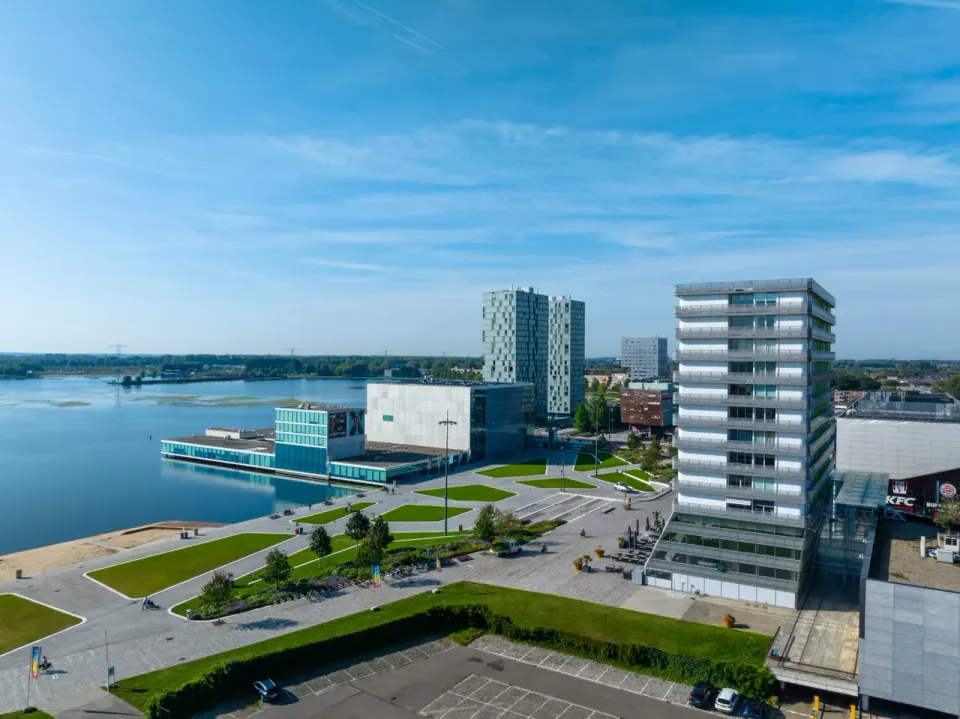
Stay informed
For more about Entrepreneurship in Almere, our innovation projects, the latest news and all events for you as a (potential) entrepreneur. Follow us on LinkedIn or sign up for the newsletter here.
Share your entrepreneurial story too? Tell us at info@onderneeminalmere.nl/en.