
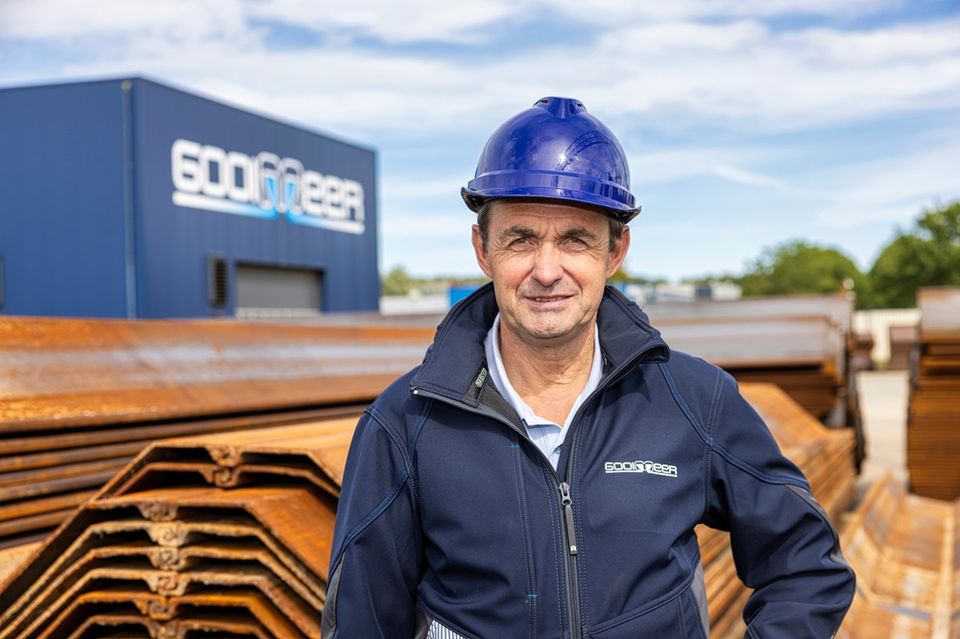
The Netherlands faces an enormous challenge: we need to phase out gas, whilst the electricity grid is becoming increasingly overloaded. At the same time, part of the solution may already be right under our noses. Or rather: in the water. Energiedamwand Nederland has developed a system in which steel sheet piling not only retains soil and water, but also generates renewable energy. Patrick Stoelhorst sees enormous potential. “For the energy transition, this is actually low-hanging fruit.”
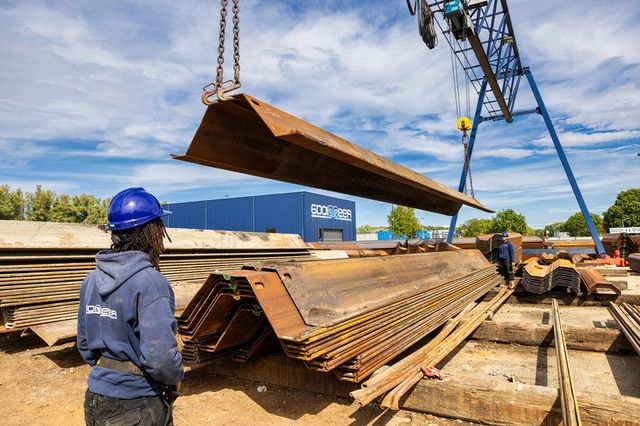
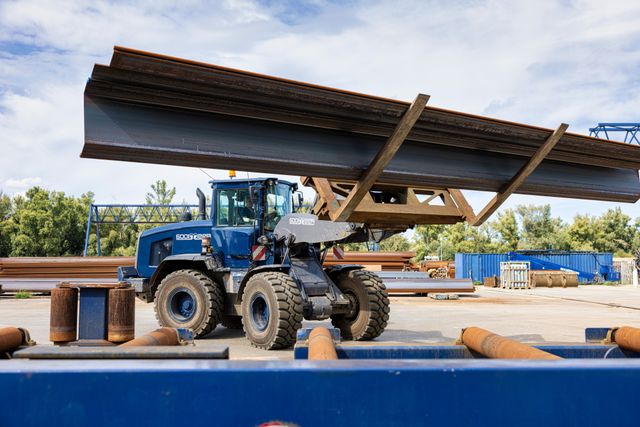
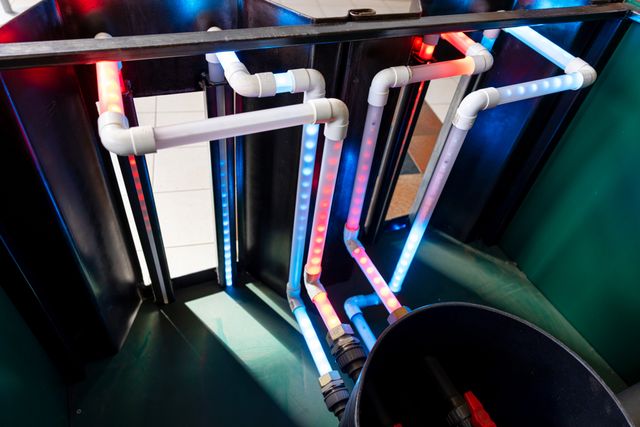
The idea is as simple as it is clever. Sheet piling is used, amongst other things, along quays and riverbanks, on dykes and around construction sites, to retain soil or water. By fitting collectors to the steel profiles, they take on a second function as a sustainable energy source. A fluid in the collectors absorbs heat from the environment and transfers it via pipes to a heat pump, which can be used to heat and/or cool buildings. Steel is an excellent conductor of heat, and because surface water is constantly in motion, a great deal of energy can be extracted from it. Patrick: “The Netherlands has a great deal of water and the highest density of steel sheet piling per square kilometre in the world. That combination is perfect.”
A second function for the sheet piling
Patrick is managing director of Gooimeer BV, which has been based at the De Vaart business park in Almere since 1997. The family-run business has been selling and hiring out steel sheet piling for fifty years. “About fifteen years ago, a German business partner suggested the idea of also using sheet piling as an energy source. We started on a small scale. The system has since been patented and further developed.”
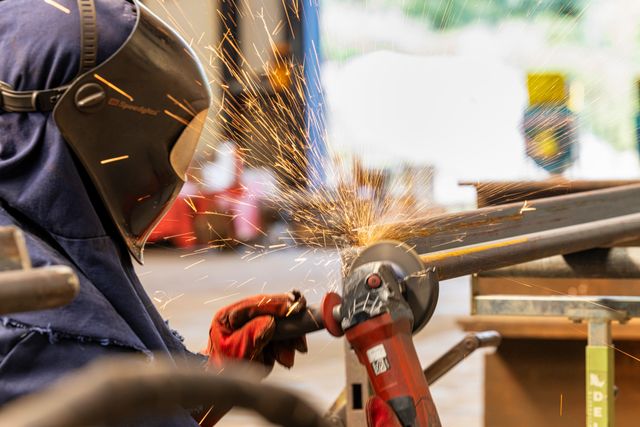
It later transpired that engineering firm CRUX Engineering was working on similar ideas. The two parties decided to join forces and founded Energiedamwand Nederland in 2022. According to Patrick, the division of tasks fits together seamlessly: CRUX contributes the technical knowledge and calculations relating to geothermal energy, whilst Gooimeer supplies the sheet piles and fits them with the necessary pipework. The latter takes place in Almere, where the energy sheet piles are actually manufactured. According to Patrick, it is precisely this combination of different areas of expertise that is key to innovation. “Sometimes you have to step outside your own world. There are far more possibilities than we realise, and the solution is often closer than you think.”
Circular before its time
Circularity is certainly not a new concept for Gooimeer. “Sheet piling, for example, often serves a temporary purpose on building sites,” explains Patrick. “As soon as it is no longer needed, it is returned to Almere. We inspect them, cut off any damaged sections and reuse the sheet piles. The removed steel is remelted and reused. That’s incredibly circular – we’ve been doing nothing else for fifty years.”
Energiedamwand builds on this circular approach. The energy system can be applied to both new and existing sheet piling. For existing sheet piling, a modular system has been developed that allows heat exchangers to be retrofitted. This makes the application versatile: from houses and flats to offices, industry and entire residential estates. There is an additional advantage, says Patrick. “A water-to-water heat pump that extracts energy from the ground or water requires far less electricity from the grid than air-source heat pumps or other gas-free heating systems. Whilst Energiedamwand does not solve grid congestion, the system can help alleviate the problem.”
Knowledge and talent for the future
For the development of the system, Energiedamwand works closely with, amongst others, Delft University of Technology and Eindhoven University of Technology. Students and researchers are involved in pilot projects, measurements and technical issues. This collaboration not only yields new knowledge, but also new talent. Several graduates who contributed to research projects relating to Energiedamwand have since joined CRUX and remain involved in the system’s ongoing development. “This creates a direct link between science and practice,” concludes Patrick. He also sees this as an attractive prospect for young engineers. “How wonderful is it to actually be able to help build the energy supply of the future?”
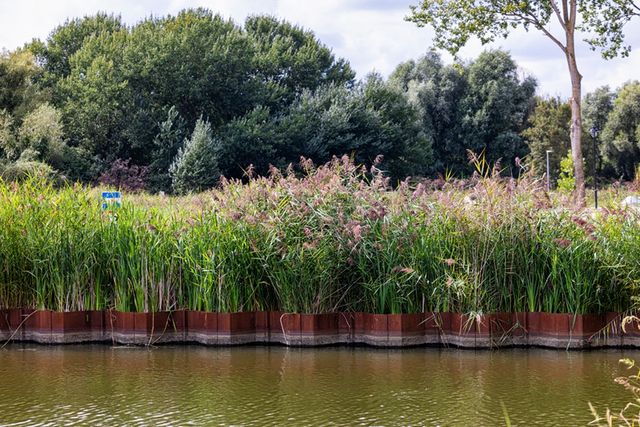
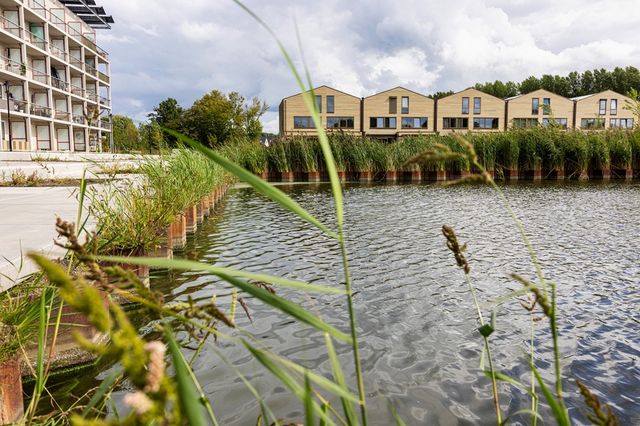
The innovative system is now proving its worth in various locations across the Netherlands and Germany. In Cuxhaven, Germany, 1.1 kilometres of Energiedamwand has been integrated into a new quay wall, generating approximately 1,750 kW of source power. The innovation has also found a home in Almere itself. The local council put Energiedamwand Nederland in touch with the ‘De Werf’ project in the Nobelhorst neighbourhood. There, 38 Energiedamwand panels were installed as part of a pilot scheme, which now supply heat to ten homes. Patrick sees opportunities, particularly in a city that is still undergoing rapid development, to incorporate this kind of sustainable infrastructure from the outset. “If you know a sheet pile wall is going to be installed, make sure you fit the infrastructure at the same time. That way, you can utilise that energy source later on.”
Space to do business
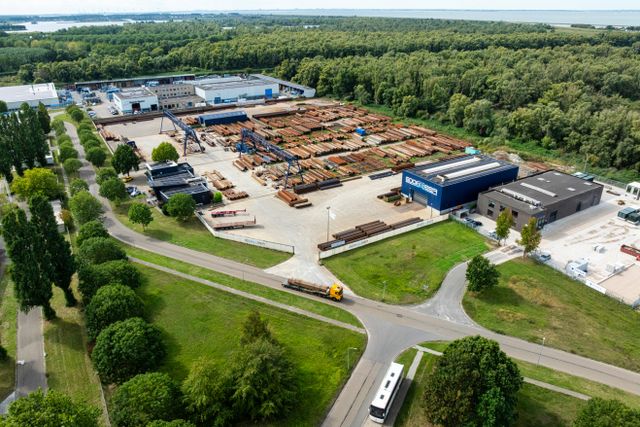
Gooimeer’s roots lie in Naarden, where Patrick’s father founded the company in 1976. The metre-long sheet piling required ever-increasing storage space, which was becoming scarce and expensive in Naarden. Almere, however, did offer that space. In 1996, Gooimeer purchased its first 10,000 square metres on the De Vaart industrial estate, and a year later the office moved there too. The company now occupies almost four hectares there and employs around fifteen people. “Almere is centrally located and we’re close to the Lage Vaart here. That’s important, as some of our materials are delivered by boat.”
Patrick also appreciates the local council’s practical approach. “Sheet piling can be up to thirty metres long. The local council has ensured that the roundabouts here have access routes for special transport. Our entrance has also been laid out at an angle rather than at right angles, following consultation, so that long lorries can access the site more easily.”
Also come to Almere
Almere is the youngest city in the Netherlands and rapidly developing, which makes it attractive to startups and innovative, sustainable businesses. The city offers a unique blend of technological progress and sustainable transition, with a contemporary infrastructure and convenient location. Almere promotes growth and collaboration, and offers entrepreneurs the space to pioneer, innovate and flourish. Almere gives entrepreneurs space!

Stay tuned!
For more about Ondernemen in Almere, our innovation projects, the latest news and all events for you as a (potential) entrepreneur.
Follow us on LinkedIn or sign up for the newsletter here.